


Steel vs Plastic Fuel Tanks: Which Is Better for Your Vehicle?
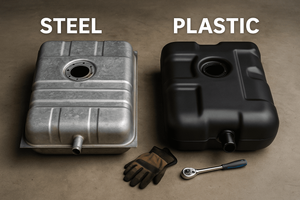
When replacing your vehicle’s gas tank, the choice between steel and polyethylene (plastic) tanks is more than just about cost — it’s about long-term durability, resistance to corrosion, and how you use your vehicle. In this post, we’ll break down the pros and cons of both materials to help you make the right decision for your classic truck or Jeep.
- ✔️ Pros: Very strong and impact-resistant, ideal for rugged use
- ✔️ OEM-fit: Many classic models came with steel tanks originally
- ❌ Cons: Prone to rust and corrosion over time
- ❌ Heavy: More difficult to handle during installation
- ✔️ Rust-proof: Will not corrode even in harsh environments
- ✔️ Lightweight: Easier to install and handle
- ✔️ Flexible: Can better absorb impacts without denting
- ❌ Not for all applications: Some high-performance setups still require steel
- Steel: Chevy/GMC, Ford F-Series Pickups, Bronco (original style), some performance trucks
- Plastic: Jeep, CJ5, CJ7, Chevy/GMC, Ford F-Series Pickups, Bronco, off-road builds
- Plastic Gas & Diesel Tanks
- International Harvester Gas Tanks
- Chevrolet Gas Tanks
- Ford Gas Tanks
- Classic Car Gas Tanks
✅ Steel Fuel Tanks – Pros & Cons
Steel gas tanks have been the industry standard for decades. They’re rugged, dependable, and commonly found on older and heavy-duty vehicles.
✅ Poly (Plastic) Fuel Tanks – Pros & Cons
Polyethylene tanks are made from high-density plastic and are gaining popularity for their corrosion resistance and light weight.
⚖️ Which One Should You Choose?
It depends on your needs. If you're restoring a show-quality vehicle and want originality, a steel tank may be preferred. If you're upgrading for long-term reliability — especially in off-road or salty climates — a poly tank is likely the better option.
🔧 Popular Applications for Each Type
🛒 Shop Gas Tanks by Vehicle
Need help choosing the right tank? Contact us or use the search filters to find the best fit for your vehicle.
